- Get link
- X
- Other Apps
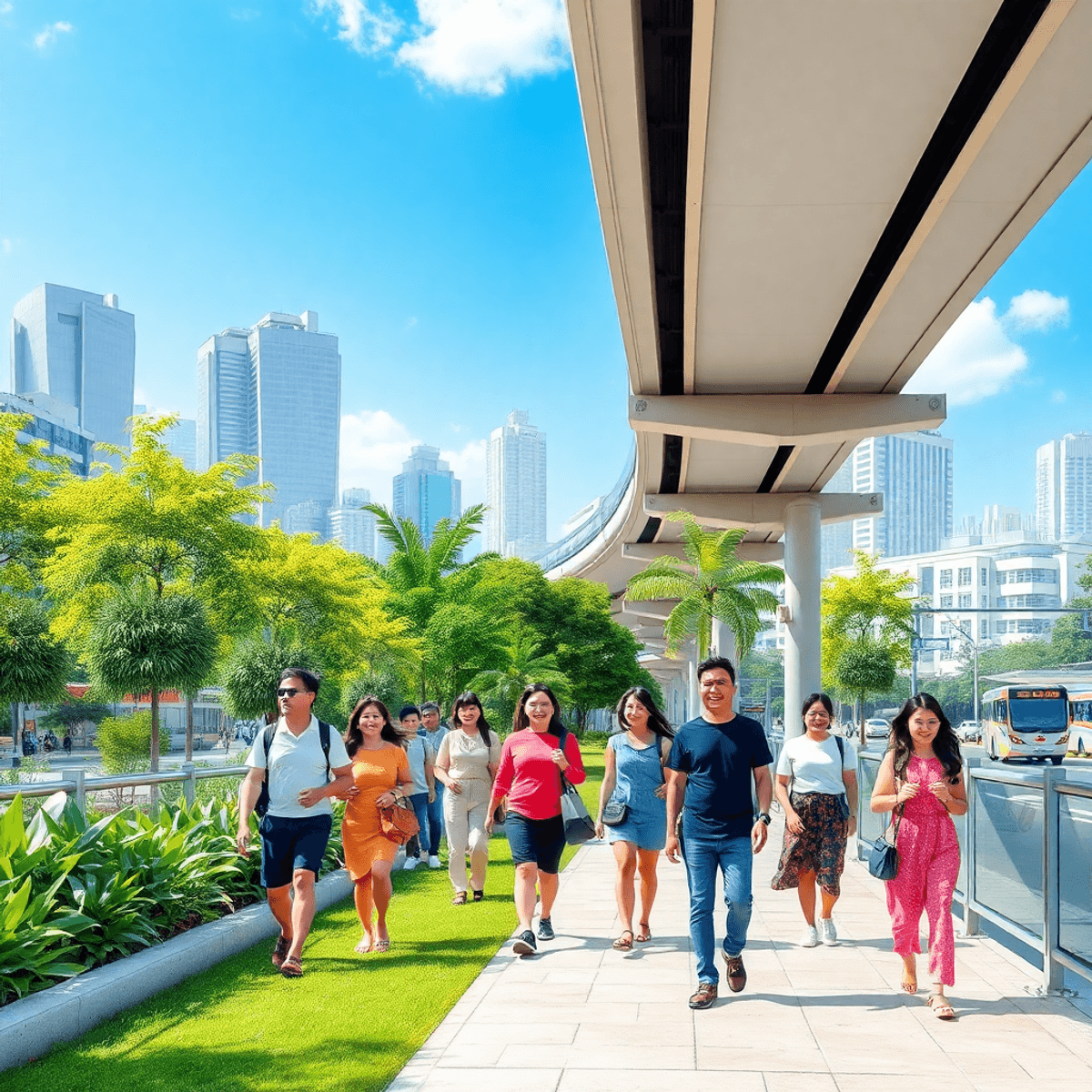
Southeast Asia’s urban landscape is shaped significantly by its efficient Skytrain systems. Bangkok, Kuala Lumpur (KL), and Singapore each boast rail networks that serve millions daily, making them critical to city mobility.
Living or staying within walking distance to Skytrain stations offers tangible advantages:
- Convenience: Avoiding traffic jams common in cities like Bangkok or Jakarta means quicker travel times to work, shopping centers, or entertainment venues.
- Cost savings: Relying on public transit instead of taxis reduces daily commuting expenses significantly.
- Accessibility: Easy access to transit hubs expands options for exploring the city without needing private vehicles.
Choosing accommodations near these transit lines changes how you experience urban life—making your journey smoother and your destination more reachable. This article explores the practicalities of skytrain walking distance in these dynamic Southeast Asian cities, guiding you through neighborhoods, transport options, and lifestyle benefits linked to station proximity.
Understanding Walking Distance and Its Measurement
Walking distance plays a critical role in urban mobility, especially when accessing public transport systems like Skytrains. It refers to the actual physical distance a person covers on foot between two points—commonly between a residence, hotel, or workplace and a transit station. This distance influences decisions about where to live or stay, how to plan daily commutes, and what transport options are practical.
Defining Walking Distance in Urban Transit Context
- Walking distance measures the pedestrian path length rather than straight-line (as-the-crow-flies) distance.
- It factors in sidewalks, crosswalks, pedestrian bridges, and urban obstacles.
- Accessibility depends on safe and convenient pedestrian routes connecting key locations such as Skytrain stations.
- In transit planning, walking distance is often considered comfortable within 400 to 800 meters (approximately 0.25 to 0.5 miles), but preferences vary by individual and city infrastructure.
Tools and Methods for Measuring Walking Distance
Several reliable tools allow you to calculate walking distances accurately:
1. Google Maps
Widely used for measuring walking routes by selecting the “walking” option.
- Allows detailed route customization avoiding highways or unsafe paths.
- Displays estimated walking time alongside distance.
- Useful for checking routes like “convenience store near me walking distance.”
2. Walking Distance Calculators
Online calculators designed specifically for pedestrians can calculate mileage based on inputted start and end points. These tools sometimes include elevation changes and terrain difficulty for more precise estimates.
3. Mobile Apps with GPS Tracking
Apps like Strava, MapMyWalk, or Fitbit track your real-time steps and mileage, ideal for tracking daily walks around transit hubs.
Tracking Miles Walked and Calculating Walking Mileage
Tracking your walking mileage helps optimize your daily routine whether commuting or exploring a city:
- Use smartphone apps or wearable devices that log steps and convert them into miles.
- Review historical data to identify average distances walked within your neighborhood or near Skytrain stations.
- Calculate total weekly or monthly mileage to gauge physical activity levels or commute efficiency.
Walking Distance Versus Driving Distance
Understanding the difference between walking distance and driving distance is essential:
Aspect | Walking Distance | Driving Distance |
Route type | Pedestrian pathways, sidewalks | Roads suitable for vehicles |
Typical route length | Often shorter due to direct pedestrian paths | Usually longer due to road layouts |
Speed | Average walking speed ~5 km/h (3 mph) | Varies widely depending on traffic |
Accessibility factors | Sidewalk availability, safety | Road conditions, traffic congestion |
Measurement tools | Google Maps (walking mode), pedometers | Google Maps (driving mode), GPS navigation |
In cities like Bangkok, Kuala Lumpur, and Singapore, the difference can significantly affect commute planning since some shortcuts available to pedestrians are inaccessible by car.
Calculating accurate walking distances using tools like walking distance calculator or walking mileage calculator ensures realistic expectations of travel times near Skytrain stations. These measurements support making informed choices about accommodations or residences with optimal access to public transit networks.
In addition to understanding these practical aspects of urban mobility, it's equally important to recognize the broader implications of our lifestyle choices. As we strive for better work-life balance—whether it's through working hard.
Skytrain Systems in Southeast Asian Cities: A Closer Look
Urban mobility in major Southeast Asian cities relies on efficient rail transit systems. Bangkok, Kuala Lumpur, and Singapore each have their own elevated or rapid transit networks that function similarly to Skytrains, improving daily commutes and urban connectivity.
Bangkok BTS Skytrain
The Bangkok BTS Skytrain is an elevated rapid transit system with two main lines: the Sukhumvit Line and the Silom Line. It covers important business districts, shopping areas, and residential neighborhoods, making it essential for navigating Bangkok's notorious traffic congestion. The stations are strategically spaced to serve densely populated urban areas, allowing for quick access to commercial hubs like Siam Square and cultural landmarks along Sukhumvit Road.
Key Features of Bangkok BTS Skytrain
- Serves millions daily, significantly reducing travel time compared to road transport.
- Stations often integrate with other modes like buses and motorcycle taxis for last-mile connectivity.
- Key corridors include popular neighborhoods such as Nana and Asok where walking distance to stations is a major lifestyle benefit.
Kuala Lumpur LRT & Monorail
Kuala Lumpur has a combination of Light Rail Transit (LRT) lines and a Monorail system that together cover both central and suburban areas. The LRT primarily operates on dedicated tracks above ground, while the Monorail serves as a feeder connecting densely populated districts.
Key Features of Kuala Lumpur LRT & Monorail
- The Kelana Jaya Line (LRT) connects major commercial centers with residential zones.
- The Monorail line enhances accessibility within the city core, especially around Bukit Bintang.
- Integration with buses and taxis including motorcycle taxis offers flexible last-mile solutions.
- Central locations like KL Sentral provide seamless interchange between LRT, KTM Komuter trains, and airport express lines.
Singapore MRT & Changi Airport Skytrain
Singapore's Mass Rapid Transit (MRT) system functions as a comprehensive city-wide rail network covering nearly every part of the island nation. It complements the automated Changi Airport Skytrain, an internal people mover connecting airport terminals and nearby hotels.
Key Features of Singapore MRT & Changi Airport Skytrain
- MRT spans over 200 km with extensive coverage ensuring most residents live within walking distance of a station.
- The Changi Airport Skytrain improves passenger flow between terminals without exiting security zones.
- Urban planning promotes “500 meter from MRT station” living concepts to boost walkability.
- Public transport integration includes buses, taxis, and ride-hailing services for efficient transfers.
Regional Comparisons: China High-Speed Trains & Metro Manila
Southeast Asia's Skytrain systems differ from larger-scale transit in neighboring regions:
- China's high-speed train stations serve long-distance travel across provinces; these are supported by urban metro systems in cities like Macao China and Hong Kong China but focus more on intercity connectivity rather than short urban hops.
- The Metro Manila rail network in the Philippines includes Light Rail Transit (LRT) and Metro Rail Transit (MRT) lines similar to Kuala Lumpur's setup but still faces challenges with overcrowding and incomplete coverage. Motorcycle taxis remain a popular mode for last-mile trips due to limited walkability around some stations.
Easing Urban Transportation Challenges
Each system addresses unique challenges:
- Bangkok BTS tackles heavy road traffic by providing reliable elevated routes avoiding street congestion.
- Kuala Lumpur's LRT & Monorail reduce reliance on private vehicles while linking key economic zones.
- Singapore's MRT combined with terminal Skytrains at Changi Airport creates one of the most integrated public transport networks promoting seamless mobility
Walking Distance to BTS Stations in Bangkok: Exploring Sukhumvit Road Neighborhoods
Bangkok’s BTS Skytrain network is a backbone of urban mobility, especially along Sukhumvit Road, one of the city’s most vibrant corridors. Being within walking distance to BTS Skytrain stations near Sukhumvit neighborhoods such as Nana and Asok offers significant benefits for residents and visitors alike.
Popular Neighborhoods Around BTS Skytrain Stations Near Sukhumvit Road
1. Nana
This area is well-known for its bustling nightlife, international dining options, and a diverse expatriate community. The Nana BTS station serves as a central hub, with many hotels, serviced apartments, and condominiums within a 5 to 10-minute walking distance.
2. Asok
Asok station sits at the crossroads of Sukhumvit Road and the MRT subway system, providing excellent connectivity. Residential buildings, business offices, shopping malls like Terminal 21, and entertainment venues are all easily reachable on foot from the station.
3. Phrom Phong (just a short ride from Sukhumvit)
Known for upscale shopping malls such as EmQuartier and Emporium, Phrom Phong offers premium residential options within close walking distance to its BTS station.
Residential and Accommodation Options Within Walking Distance
You can find a wide range of accommodations near these BTS stations:
- Serviced Apartments: Ideal for longer stays or business travelers seeking convenience combined with home-like amenities. Many offer direct access or just a short walk to stations on Sukhumvit Road.
- Condominiums: Both high-rise luxury condos and mid-range options abound around Nana and Asok. Developers market properties emphasizing “walking distance to Skytrain” as a key selling point.
- Hotels: From budget hotels to international chains, numerous lodging options lie within easy walking reach of BTS stations. This proximity allows guests to skip costly taxis and enjoy seamless city exploration.
Lifestyle Advantages of Living or Staying Near BTS Stations
Living or staying close to BTS Skytrain stations along Sukhumvit Road means:
- Easy Access to Shopping: Major malls like Terminal 21 at Asok station place retail therapy just minutes away by foot. Street markets and boutique shops line the streets around Nana station.
- Vibrant Nightlife: Bars, clubs, rooftop lounges, and live music venues are concentrated near these transit hubs. Walking between your accommodation and entertainment spots eliminates concerns about late-night transportation.
- Cultural Sites: Temples such as Wat Maha Vajiravudh and art galleries are accessible within short walks or quick rides from these stations.
Measuring Your Walking Distance Around Sukhumvit
Understanding your exact walking distance between two points near BTS stations can improve your daily planning:
- Use tools like Google Maps to measure walking distance accurately from your hotel or residence to the nearest BTS entrance.
- Apps that help count walking distance or track my walking distance provide real-time feedback on how far you’ve traveled on foot.
- Calculating your distance measurement by walking ensures you know whether your commute fits comfortably into your schedule without rushing.
This practical approach helps you decide which neighborhood best suits your lifestyle needs based on proximity to transit and urban amenities.
Walking Distance to LRT & Monorail Stations in Kuala Lumpur: Central Areas Serviced by Transit Lines
Kuala Lumpur’s urban core is well covered by the Monorail and Light Rail Transit (LRT) systems, providing excellent access to many central neighborhoods. These transit lines form the backbone of public transportation in key districts such as Bukit Bintang, KL Sentral, and the Golden Triangle, where short walking distances from stations to hotels, condos, and offices make daily travel efficient.
Central Kuala Lumpur Areas Served by Monorail and LRT
- Bukit Bintang: A vibrant shopping and entertainment district with multiple Monorail and LRT stations nearby. Hotels like Berjaya Times Square Hotel and The Westin Kuala Lumpur are within a 5–10 minute walk to stations such as Bukit Bintang (Monorail) and Raja Chulan (LRT).
- KL Sentral: The main transportation hub connecting LRT lines with KTM Komuter trains, the KTM Intercity service, and the airport express train (KLIA Ekspres). Numerous serviced apartments and hotels like Aloft KL Sentral provide direct pedestrian access to this station.
- Golden Triangle: Overlaps with Bukit Bintang but extends towards areas like Bandaraya LRT station. This district is packed with office towers, retail centers, and residential complexes all within easy walking distance of transit stops.
Advantages for Tourists and Residents
Choosing accommodations or residences close to Monorail or LRT stations means you can:
- Avoid costly taxis or rideshares, particularly during peak hours when traffic congestion spikes.
- Enjoy reliable transit that operates frequently throughout the day, minimizing wait times.
- Walk comfortably between your destination and the station without needing additional transport arrangements.
- Access major attractions such as Pavilion Kuala Lumpur shopping mall or Jalan Alor food street effortlessly on foot from transit points.
Seamless Integration with Other Transport Modes
Kuala Lumpur’s transit network is designed for connectivity:
- The Monorail intersects with various LRT lines at stations like Hang Tuah, enabling smooth transfers without exiting fare zones.
- Bus services operate in coordination with rail schedules, providing first-mile/last-mile connections for locations slightly beyond comfortable walking distances.
- KL Sentral acts as a multimodal node where rail meets long-distance buses, taxis, and airport express trains—creating a comprehensive urban mobility ecosystem.
This integrated approach reduces dependence on private vehicles while promoting walkability near transit hubs. You benefit from reduced commute times and greater flexibility in planning your routes across the city.
Walking distances around Kuala Lumpur’s central Monorail and LRT stations typically range between 300 to 800 meters for most accommodations. This range strikes a balance between convenience and urban vibrancy, allowing you to explore the city easily without sacrificing comfort or safety during your daily travels.
In today's digital age, having an online presence is crucial for both individuals and businesses. By leveraging SEO strategies, you can increase visibility online. Furthermore, understanding the pros and cons of private blog networks can be beneficial if you're considering this route for enhancing your online presence. Additionally, niche edits offer another strategy for improving your website's SEO performance.
Walking Distance to MRT Stations in Singapore: City-Wide Connectivity with a Focus on Changi Airport Station
Singapore’s MRT system operates as a comprehensive city-wide Skytrain network, connecting residential areas, business districts, shopping hubs, and the airport with high efficiency. The extensive rail coverage ensures most urban locations enjoy convenient access to public transportation within walking distance, reducing reliance on driving or taxis.
Changi Airport MRT Station and Its Automated People Mover
Changi Airport serves as a crucial transit node with the Changi Airport MRT station acting as the gateway for travelers arriving by train. This station links seamlessly to multiple terminals through an automated people mover system, often referred to as the Skytrain. This internal shuttle facilitates quick transfers between terminals and connects nearby airport hotels.
- Walking distances from terminals to the MRT station are typically short, ranging from 5 to 15 minutes depending on your arrival point.
- Hotels adjacent to the airport provide shuttle bus services or are within easy walking distance of both terminals and the MRT station, minimizing transit hassles.
- The automated Skytrain reduces what would otherwise be a longer walk or driving distance into a smooth, rapid connection between different parts of the airport complex.
This setup exemplifies how Singapore integrates last-mile connectivity into its transit infrastructure, ensuring passengers experience minimal friction when moving from train to terminal or accommodation.
Residential Developments Promoting Walkability
Urban planning in Singapore increasingly emphasizes walkable environments near MRT stations. One notable concept is the "500 meter from station lifestyle," where condominiums and residential complexes advertise their proximity as a key selling point.
- Living within 500 meters of an MRT station offers residents easy access to public transport without needing a vehicle.
- This proximity translates into shorter walking times to the station, often around 5–7 minutes on foot.
- Such developments encourage healthier lifestyles by promoting walking while also reducing traffic congestion caused by private car use.
- Condominium distance from station is frequently highlighted in property listings, underlining convenience as a major attraction for buyers and renters.
The focus on walkability aligns with broader sustainability goals and enhances quality of urban life by linking daily activities directly with efficient transit options.
Comparing Driving Distance to Walking Distance in Singapore’s Transit Context
While many commuters might consider driving or taking taxis for convenience, Singapore’s compact urban form makes walking distances manageable. The shift from driving distance to walking distance near MRT stations is practical:
- Short walks replace often congested car journeys that can take longer during peak hours.
- Accessibility encourages more frequent use of public transport rather than private vehicles.
- In comparison with other Southeast Asian cities like Ho Chi Minh City, where transit systems are still developing, Singapore offers superior integration between walkability and rail connectivity.
Focusing on optimizing pedestrian routes around stations further supports this transition. Clear signage, sheltered walkways, and pedestrian-friendly crossings all contribute to making walking distance practical and safe.
Summary Points
- Singapore’s MRT acts like a city-wide Skytrain network linking residences, workplaces, shopping areas, and airports.
- Changi Airport’s Skytrain (automated people mover) connects terminals and adjacent hotels via short walks or shuttle buses.
- Residential projects promote a “500 meter from station” lifestyle concept that fosters walkability and reduces dependence on cars.
- Transitioning from driving distance to walking distance around stations optimizes commute times and urban mobility compared with less integrated regional cities such as Ho Chi Minh City.
This combination of extensive rail coverage, last-mile solutions at key hubs like Changi Airport, and pedestrian-focused urban design shapes how people experience public transport accessibility in Singapore.
Practical Tips for Measuring Your Walking Distance to Skytrain Stations
Knowing how to measure a walking route accurately helps you better understand the walking distance to Skytrain stations. This knowledge can save time, reduce stress during commutes, and improve your daily travel experience.
Using Google Maps to Measure Walking Distance
Google Maps is one of the most accessible tools to count walking distance today. Follow these steps:
- Open Google Maps on your smartphone or desktop.
- Enter your starting point—this could be your hotel, residence, or any address.
- Input the destination as the nearest Skytrain station.
- Choose the walking icon (usually a pedestrian symbol) to switch the route mode to walking.
- Google Maps will display the recommended path, including total distance and estimated walking time.
- For more accuracy, use the “Measure Distance” feature by right-clicking on the map (desktop) or tapping and holding a point (mobile), then adding points along your intended route.
- Adjust routes manually if you want to follow specific sidewalks or avoid busy streets.
This method provides real-time updates considering pedestrian paths and obstacles, making it practical for daily use in cities like Bangkok, Kuala Lumpur, and Singapore.
Apps and Devices for Tracking Distance Walked Today
Tracking your daily steps and total distances walked enhances awareness of your mobility habits around transit hubs. Here are some effective methods:
- Pedometer apps like Pacer, Accupedo, or Samsung Health count steps and estimate distance based on your stride length.
- Wearable devices such as Fitbit, Apple Watch, or Garmin offer more precise tracking with GPS integration to log exact routes walked near Skytrain stations.
- Many smartphones have built-in health apps that automatically track steps if location services are enabled.
- Some apps allow exporting data or syncing with transit apps to analyze how much distance you cover between accommodations and stations.
If you're looking for a good app specifically for tracking walks, you might find insights from this Reddit discussion helpful.
Using these tools regularly helps you visualize patterns in your walking routines and identify opportunities for more efficient routes.
Benefits of Measuring Your Walking Distance
Tracking how far you walk encourages smarter commuting decisions:
- Knowing exact distances helps estimate travel times more accurately than guessing based on maps alone.
- Identifying shorter or less crowded pathways can make daily trips less tiring and more enjoyable.
- You can compare multiple routes to find options that balance walkability with safety—important in busy urban centers.
- For those staying near Skytrain stations temporarily, measuring routes before heading out reduces uncertainty when navigating unfamiliar neighborhoods.
Measuring your walks also supports health goals by quantifying physical activity during commutes. It integrates practical urban mobility with personal well-being.
Understanding your walking distance to Skytrain stations empowers you to optimize both time and effort spent moving around Southeast Asian cities with extensive rail networks. These insights not only enhance daily commuting experiences but also encourage adopting a work smart play hard lifestyle by effectively balancing work commitments with leisure activities such as exploring new.
Last-Mile Transportation Options Complementing Walkability Near Skytrain Stations
Even if you stay close to a Skytrain station, sometimes the distance between your accommodation or destination and the station feels just a bit too far for comfortable walking. This is where last-mile transportation options become essential. These options bridge the gap, making travel seamless and convenient.
Key Last-Mile Choices
1. Taxi Near Station
Car taxis remain a popular choice in Bangkok, Kuala Lumpur, and Singapore. You can easily find taxis waiting near major Skytrain hubs or book them via ride-hailing apps like Grab or Gojek. Taxis provide door-to-door convenience when you carry luggage or are traveling during hot or rainy weather.
2. Motorcycle Taxi Options
In Bangkok and Kuala Lumpur, motorcycle taxis offer a faster alternative when traffic congestion slows down cars. These are ideal for short distances from stations to nearby neighborhoods or hotels. Motorcycle taxis are widely available near BTS stations in Bangkok and LRT stops in KL, often waiting at designated stands or accessible by quick booking through apps.
3. Car Taxi Services
Besides street-hailed cabs, app-based car taxi services have transformed urban transit around these cities’ Skytrain systems. They offer fixed fares, cashless payments, and real-time tracking—features that enhance safety and convenience near busy transit hubs.
How These Options Support Accessibility
- They reduce dependence on private vehicles by providing flexible transport solutions for the “last mile” from stations to final destinations.
- Motorcycles and cars navigate traffic conditions differently, giving commuters choices based on urgency, comfort preferences, and budget.
- Taxis near stations cater not only to tourists unfamiliar with public routes but also locals who prefer a quick connection without walking long distances.
- Integration with mobile apps simplifies booking and payment, supporting smooth transfers between Skytrain rides and ground transport.
By combining walkability with these last-mile options, you gain the freedom to easily access areas beyond immediate station vicinities while maintaining reliable urban mobility throughout Bangkok, Kuala Lumpur, and Singapore.
The Impact of Station Proximity on Residential Lifestyle in Southeast Asia: A Case Study on Next to the Station Lifestyle Concept
In rapidly urbanizing cities like Bangkok, Kuala Lumpur, and Singapore, the next to the station lifestyle concept has become a defining feature of modern residential living. This approach centers on locating residential buildings—especially condominiums—within immediate walking distance of Skytrain or rapid transit stations. The appeal of this lifestyle, often encapsulated in the phrase "work hard, play hard," is reshaping real estate markets and influencing how residents experience the city.
Influence on Real Estate Demand and Pricing
1. Premium Pricing for Proximity
Properties near BTS (Bangkok), LRT/Monorail (KL), or MRT (Singapore) stations command higher prices compared to those farther away. Developers capitalize on this by marketing units as part of the coveted “next to the station” condominium lifestyle.
2. High Demand from Urban Professionals
Working adults prioritize short commutes and easy access to transit hubs, driving up demand for south east asia residential buildings near stations.
3. Mixed-Use Developments
Many new projects integrate retail, dining, and leisure facilities alongside residences within walking distance of transit. This enhances property value through convenience and lifestyle amenities.
4. Sustained Investment Appeal
Investors view properties close to Skytrain stations as safer bets due to consistent rental demand from tenants who seek connectivity without dependence on cars or taxis.
Advantages for Residents
1. Reduced Reliance on Private Vehicles
Living next to a station minimizes the need for car ownership or frequent taxi rides. Residents save money on fuel, parking fees, and maintenance.
2. Enhanced Urban Mobility Experience
Seamless access to public transport networks means faster travel across sprawling metropolitan areas. This convenience improves work-life balance and daily productivity.
3. Walkability Promoting Healthier Living
Proximity encourages walking not just to stations but also nearby shops, parks, and workplaces—boosting physical activity and social interaction. In fact, such walkability promotes healthier living, as residents engage more with their environment.
4. Environmental Benefits
Reduced vehicle usage contributes to lower pollution levels and less traffic congestion around residential neighborhoods.
Condominium Lifestyle Centered Around Transit Access
1. Community Spaces Designed for Commuters
Many condominiums near stations feature bike storage, pedestrian-friendly pathways, and shuttle services linking directly to transit stops.
2. Smart Integration with Urban Infrastructure
Buildings often incorporate technology-enabled security systems and smart home features tailored to busy urban dwellers who rely heavily on public transport schedules.
3. Cultural Connectivity
Proximity allows residents quick access to cultural events, nightlife districts, and shopping centers often clustered around major Skytrain nodes.
The next to the station lifestyle is more than a marketing slogan; it reflects an evolving urban pattern where accessibility drives residential preferences. In South East Asia’s bustling cities, this concept defines how people live, work, and move—making proximity to Skytrain stations a cornerstone of contemporary condominium lifestyle choices.
Conclusion
Living close to Skytrain stations in Bangkok, Kuala Lumpur, and Singapore gives you real benefits. These go further than just making life easy. The train systems work well with walkable city plans. This helps make life better for the people who live there and also for visitors.
Key advantages of walking distance to Skytrain include:
Saving time: You can get to train stations fast, so you spend less time getting from place to place and can do more each day.
Saving money: You don’t have to ride in taxis or drive your own car as much, so you pay less for travel.
Better health: Walking to the train station is good for you, because it gets you moving and helps you feel better.
Helps the planet: Driving less means there are fewer cars on the road, so there is not as much traffic or pollution in busy areas.
Better access: Being close to Skytrain stations makes it easy to reach shopping, work, fun spots, and special places.
Cities like Bangkok, KL, and Singapore show how mixing train systems on tracks above ground with areas where people can walk helps make life in the city better for the long run. The way of living “next to the station” is not just about where homes are built. It points to a smarter use of space, where moving around is easy and part of everyday life.
If you want to know where to stay or live in these fast-changing Southeast Asian cities, staying close to a Skytrain station is a good idea. You can easily get to many places, and you find friendly neighborhoods where it is easy to get around. You also get to enjoy many good things about city life.
Choosing transit-oriented homes is choosing a future in the city where you worry less about traffic and feel more free to move around. Living close to a Skytrain station brings good things. You get better connections, feel healthier, save money, and enjoy life in the city much more.
FAQs (Frequently Asked Questions)
What are the benefits of living or staying near Skytrain stations in Southeast Asian cities?
Living or staying close to Skytrain stops in places like Bangkok, Kuala Lumpur, and Singapore gives people lots of benefits. You get to save money, move around the city with ease, and reach many places fast. People can get to shopping spots, nightlife, and local sites without the need to use taxis or their own cars all the time. This makes moving around simple and saves time for everyone.
How can I accurately measure walking distance to Skytrain stations?
You can use tools like Google Maps’ walking distance feature or walking distance calculators to find out how far it is from your place to Skytrain stations. Tracking apps and devices help you keep an eye on your steps and how far you walk each day. This can help you find new ways to get around and use your time better.
What are the main Skytrain systems in Bangkok, Kuala Lumpur, and Singapore?
Bangkok has the BTS Skytrain. Kuala Lumpur runs the LRT and Monorail. Singapore uses the MRT and the Changi Airport Skytrain. These systems help a lot to make travel better for the people in each city. They make it much easier to get around.
How does walking distance to Skytrain stations influence residential lifestyle in Southeast Asia?
Living close to Skytrain stations has a big effect on how many people want to buy houses and on prices. Life next to the station is easy for people. They can save time because they do not have to use their cars much. They also can move around the city better and feel more free. People can get to lively neighborhoods on foot without any trouble.
What last-mile transportation options complement walkability near Skytrain stations?
When stations are too far to walk to, last-mile choices like taxis or motorcycle taxis help people get where they need to go. These rides make it easy to reach big Skytrain hubs in Bangkok, Kuala Lumpur, and Singapore. They help most people use transit with no pause, and make trips feel smooth.
Which neighborhoods offer easy walking access to BTS stations in Bangkok?
Popular Sukhumvit Road neighborhoods like Nana and Asok let people walk easily to the BTS Skytrain stations. In these areas, you can find many choices for places to live and stay. There are also good things, like being close to shopping centers, night spots, and things to see in the city.
Comments
Post a Comment