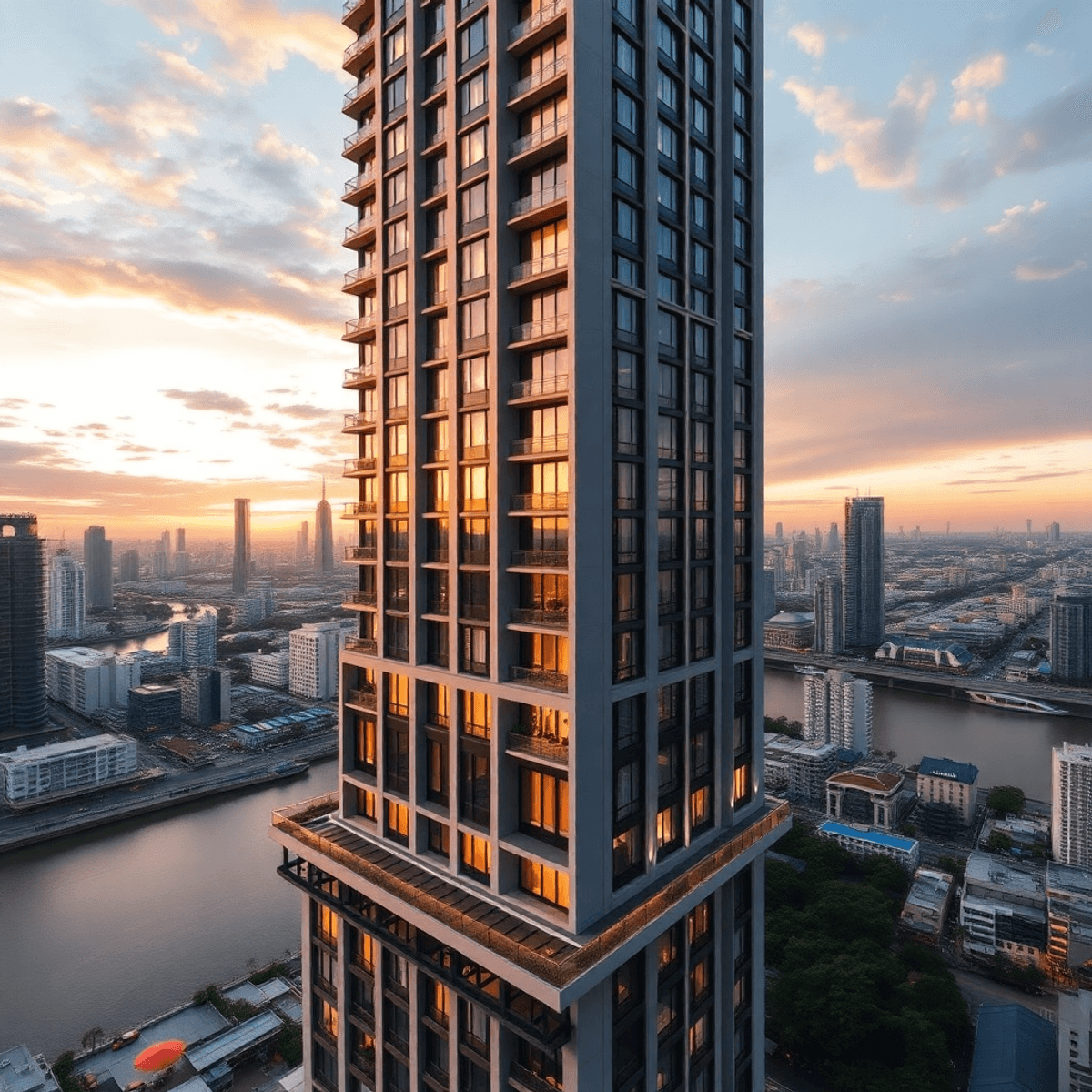
The Thailand rental market 2026 presents a complex picture, especially when you look at condo rentals in Bangkok's prime districts like Sukhumvit, Sathorn, and Phrom Phong. These neighborhoods continue to attract foreigners seeking a modern architecture lifestyle combined with vibrant city living. Despite rising Bangkok condo prices, renting a condo in Thailand remains an appealing option for many expats.
You might have seen countless Condo Tour videos showcasing stylish one-bedroom units in Sukhumvit or spacious two-bedroom condos in Phrom Phong. These tours highlight features such as river views, smart home systems, and designer interiors, making them seem like the perfect place to live in Bangkok. The reality behind the scenes, however, reveals deeper market dynamics that influence prices and availability.
Foreigners still find renting attractive because of Thailand’s relaxed visa policies and the ability to secure high-quality housing without long-term commitments. The lifestyle benefits—proximity to amenities, international schools, coworking spaces, and nightlife—make these condos desirable despite premium rents.
This article aims to give you:
- A detailed understanding of why Bangkok condo prices keep rising even as vacancy rates grow
- Insights into structural factors driving discrepancies between asking rents and local economic realities
- An exploration of cultural and investor behaviors shaping the rental landscape
- Practical advice for expats planning to rent long-term in Thailand’s capital
If you're considering your first lease or renewing your thailand visa, this guide will equip you with essential knowledge missing from typical expat content.
For those contemplating a more permanent move, it might be worth exploring the option of purchasing a property. Purchasing a condo made easy: expert tips can provide valuable insights into this process.
If you're interested in investing in multi-family properties instead of single condos, our beginner's guide to multi-family low could be beneficial.
Additionally, understanding the differences between various types of properties is crucial. Our article on decoding the difference between condo and other property types may help clarify this aspect.
Lastly, for those who are already in the rental market but facing challenges, our resource on insider secrets on how to successfully navigate the rental market might offer some practical solutions.
Understanding the Current Condo Rental Market in Thailand
The Thailand condo rental market 2026 presents an intriguing paradox when examining price trends alongside economic realities. Bangkok’s prime districts—Sukhumvit, Sathorn, and Phrom Phong—continue to dominate demand, but rental prices have evolved in ways that often defy straightforward market logic.
Condo Rental Price Trends Thailand 2015 to 2026
- Between 2015 and 2020, asking rents for one-bedroom units in central Bangkok districts saw moderate annual growth averaging around 3% to 5%, aligning somewhat with inflation and consumer price index Thailand (CPI) movements.
- From 2021 onwards, a sharp acceleration emerged. Rents for comparable condos rose by double digits year-on-year in many cases, pushing typical listings to ranges like 45,000–70,000 baht per month for standard units.
- This surge outpaced general inflation and even wage growth indicators by a significant margin.
- The pattern is consistent across sought-after neighborhoods but is especially pronounced in Sukhumvit and Phrom Phong, where expatriate demand remains concentrated.
Economic Indicators vs. Rising Asking Rents
- Average Thai household income has remained relatively stagnant when adjusted for inflation; recent data shows median monthly household earnings hovering near 30,000 baht.
- The official minimum wage varies by region but generally falls between 313 and 336 baht per day, translating roughly to about 9,000–10,000 baht per month for full-time workers.
- These figures create a stark contrast to headline Bangkok condo prices: a studio or one-bedroom unit priced at 40,000+ baht monthly represents multiple times the income of average Thai households.
- Tenant pools capable of affording such rents are primarily foreigners or high-income locals rather than the broader domestic population.
This disconnect highlights a bifurcated rental market where owner expectations and tenant affordability diverge sharply.
Vacancy Rate and Market Health Assessment
Vacancy rate serves as a critical barometer of rental market functionality:
- Estimates place vacancy rates between 25% and 40% in premium central Bangkok districts. This means roughly one-quarter to two-fifths of available condo units remain unoccupied at any given time.
- High vacancy typically signals pricing above what the local market can sustain—a classic indicator of oversupply or inflated asking rents.
- In functioning markets, landlords respond to vacancies by adjusting prices downward to attract tenants. The persistent vacancy overhang in Bangkok suggests this feedback mechanism is impaired or overridden by other forces.
- Owners may leave units empty longer rather than accept lower rents due to factors explored later such as foreign ownership mentalities or developer strategies.
Vacancy rates also impact tenants directly:
- Prospective renters face fewer immediate options at headline prices since many vacant units do not come with realistic rent reductions.
- The consumer price index Thailand does not capture this micro-level distortion; it reflects broad inflation trends rather than localized rental market imbalances.
Owner vs. Tenant Dynamics
The dynamic between owners setting asking rents and tenants able or willing to pay creates tension:
- Owners maintain high asking rents expecting returns aligned with past purchase prices or perceived investment value.
- Tenants—especially locals—are priced out unless subsidized by employers or foreign currency income streams.
- Newly arrived foreigners often enter this landscape unaware of structural distortions, accepting high rents as standard.
This misalignment shapes how the Thailand rental market functions compare to NYC.
The Structural Reasons Behind Price Detachment in the Thai Rental Market
Vacancy Overhang and Its Impact
Price detachment in the Thai rental market can be attributed to a significant vacancy overhang, especially in premium central Bangkok districts like Sukhumvit and Sathorn. Industry estimates suggest that the condo rental vacancy rate in Bangkok ranges from 25% to 40% in these highly sought-after areas. This indicates that approximately one-quarter to nearly half of all available units remain unoccupied, despite rising asking rents often advertised in Rent A Condo in Thailand listings.
This large number of empty units directly challenges the common narrative spread by many expat content creators and condo tour hosts. These tours frequently showcase luxurious features such as a cinema inside the building, rooftop terrace, breathtaking city view, appealing river view, or convenient road view. However, these visual attractions hide an underlying truth: a market far from being "hot" or fully absorbed.
Vacant housing units in Thailand are not only limited to unsold developer inventory; many individually owned condos also sit empty for long periods. The existence of so many unoccupied units suggests that asking rents have not decreased to reflect true market demand and affordability levels. Typically, such high vacancy rates would compel landlords to lower rents, attracting tenants and reducing excess supply. However, this feedback loop seems to be broken in Bangkok's case.
Several factors contribute to this disconnect:
- The influx of new arrivals who are unfamiliar with local economic realities and compare rents horizontally against expensive home cities instead of vertically against local income levels.
- Developers maintaining high asking rents on new launches to protect inventory valuations.
- Landlords' cultural tendencies towards pride and face-saving that discourage rent reductions even if it results in prolonged vacancies.
This vacancy overhang creates ongoing inefficiencies, distorting what should be a functioning market where price naturally balances supply and demand. Consequently, we see a rental landscape filled with high-priced units featuring amenities like co-working spaces but lacking basic economic logic considering Thailand's broader income context.
Understanding this structural reason behind price detachment helps clarify why you may come across numerous listings promoting luxury condominiums with breathtaking views at premium prices while still observing many units remaining empty month after month near transit hubs such as airports or business districts with abundant co-working space options nearby.
Foreign Buyer Exposure and Its Influence on Pricing Decisions
Foreign ownership plays a critical role in the price detachment observed in the Thai rental market. A significant portion of condos in central Bangkok, especially in premium districts like Sukhumvit, Sathorn, and Phrom Phong, are owned by foreigners. Many of these owners do not engage actively in the rental market but instead hold units as long-term investments or second homes. This behavior influences pricing dynamics in several ways:
1. Investment Mindset Over Rental Yield
Foreign buyers often prioritize capital appreciation or personal use value rather than maximizing rental income. As a result, they set asking rents based on original purchase prices or perceived asset value, not current market rent levels supported by local economic factors.
2. Emotional Attachment to Purchase Price
Owners retain a psychological anchor tied to what they originally paid for their condo—whether that was during a market peak or an earlier development launch phase. This emotional connection causes reluctance to reduce rents even when facing prolonged vacancies.
3. Units Held Empty Despite High Asking Rents
Many condos remain empty for months or even years despite having asking rents well above what local tenants can afford. The condo might boast attractive features such as a rooftop terrace with city view, cinema inside the building, or river view amenities, yet remain unoccupied because prices are out of sync with actual demand.
4. Disruption of Normal Market Signals
In functioning rental markets, landlords lower rents when units stay vacant to attract tenants quickly. However, foreign owners holding vacant housing units in Thailand often resist this adjustment. This disrupts typical supply-demand dynamics and prevents the condo rental vacancy rate Bangkok from falling to sustainable levels.
5. Impact on Secondary Market Pricing
Elevated asking rents set by foreign owners influence secondary market expectations. Local landlords may maintain higher prices for units with similar attributes—garden view, noise level considerations, pollution, proximity to airport or co working spaces—even if tenants cannot afford them.
6. Oversupply Combined with Price Rigidity
The structural imbalance created by a large number of vacant housing units in Thailand exacerbates the problem. Unsold developer inventory combined with individually owned unoccupied units leads to vacancy rates estimated between 25% and 40% in central Bangkok zones. This oversupply should ideally push down asking rents but does not due to foreign owner pricing behavior.
7. Limited Responsiveness to Local Economic Realities
Foreign owners frequently overlook local economic indicators such as Thai household income levels and minimum wage standards when setting rent. Their focus remains on preserving asset value from a foreign investment perspective rather than aligning with the realities faced by potential renters within Bangkok’s urban environment.
The presence of foreign buyers holding onto empty units at inflated rent levels creates one of the main structural reasons behind the persistent price detachment in Thai rental markets. This phenomenon contributes significantly to why many condos stand vacant despite high asking rents and why normal price adjustments expected in functioning markets fail to materialize under current conditions.
Developer Pricing Strategy Maintaining Elevated Asking Rents
The price detachment in the Thai rental market can be traced significantly to how developers manage their unsold inventory. Many new condo projects in central Bangkok feature appealing amenities: cinemas inside the building, rooftop terraces with panoramic city views, and units boasting river or road views. These features are heavily marketed to justify high asking rents. However, these high prices often clash with economic realities faced by renters.
Incentives for Developers
Developers have a clear incentive to maintain elevated asking rents at new launches. The reasoning centers on supporting valuations of unsold inventory on their balance sheets. By setting rents at premium levels, they preserve the perceived value of their assets. This is crucial when unsold units remain after project completion, especially in areas like Sukhumvit or Sathorn where the condo rental vacancy rate in Bangkok can reach between 25% and 40%.
Structural Imbalance Created
This strategy creates a structural imbalance:
- Developers price new units based on original launch expectations rather than current rental market reality.
- High asking rents on new builds serve as benchmarks, pushing secondary market landlords to match these prices.
- Even when yields—returns on investment—are unsustainable considering local income levels, developers resist lowering prices.
- The result is many vacant housing units in Thailand remain empty, contradicting traditional supply-and-demand dynamics.
Complexity Added by Oversupply
The oversupply near key transport hubs such as BTS Skytrain stations adds complexity. While proximity to transit should boost demand, overcrowding and constant traffic jams reduce neighborhood appeal for some renters. Despite this, developers push pricing upward, banking on perceived location advantages rather than genuine market absorption capacity.
Pressure on Existing Landlords
This pricing approach pressures existing landlords who fear being undercut by cheaper new launches. They maintain or increase asking rents regardless of prolonged vacancies. As a consequence:
- Empty units stay unoccupied for months or even years.
- Renters face inflated prices disconnected from average incomes.
- The feedback loop that usually drives prices down when vacancies rise is broken.
Impact on Financial Reporting
Developers’ focus on headline rental figures ties directly into financial reporting and investor perceptions. Marking down rental rates would reveal softer demand, forcing them to write down asset values—an undesirable outcome in a competitive real estate sector.
Disconnect in Neighborhoods with Co-Working Spaces
In neighborhoods with abundant co-working spaces and modern lifestyle amenities designed to attract foreign tenants and young professionals, the disconnect between advertised rents and actual occupancy becomes more apparent. Potential renters compare costs not against local wages but against international city standards like London or Sydney. This further sustains inflated prices despite the high number of empty units.
Understanding this developer-driven pricing dynamic helps explain why many condos remain vacant even as landlords hold firm on monthly rent demands well above what would clear the market effectively.
To navigate this challenging landscape, prospective renters might consider exploring high-rise condos for sale that align better with their financial capabilities. On the other hand, developers could benefit from adopting a more realistic pricing strategy that reflects current market conditions rather than maintaining an unrealistic valuation based on past expectations.
New-Arrival Foreigner as Marginal Buyer Sustaining High Prices
The price detachment in Thai rental market becomes clearer when examining the role of new-arrival foreigners as the marginal buyers sustaining elevated rents. Many newly arrived expats, especially those from cities like London, San Francisco, or Sydney, approach renting with a mindset shaped by their home markets rather than the local economic environment.
1. Horizontal Rent Comparison
These renters compare asking prices for condos in central Bangkok—often featuring amenities like cinema inside the building, rooftop terraces, and views of the city, river, or main roads—to what they would pay in their native cities. For example, a rent of 55,000 baht per month in Sukhumvit might appear reasonable or even cheap compared to equivalent neighborhoods back home where rents can be three to four times higher. The presence of co working spaces nearby and easy access to the airport further enhances perceived value.
2. Ignoring Local Benchmarks
This horizontal comparison disregards vertical benchmarks such as average Thai household income, minimum wage levels, or the condo rental vacancy rate Bangkok. It also ignores the economic reality of high vacant housing units in Thailand, including both unsold developer inventory and individually owned but unoccupied units. The influx of these uninformed renters sustains asking rents that far exceed what is justifiable by local market fundamentals.
3. Breaking Feedback Loops
In functioning rental markets, high vacancy rates should signal landlords to reduce prices until units are rented out. However, because new-arrival foreigners validate inflated asking prices through their willingness to pay based on foreign benchmarks rather than local conditions, this feedback mechanism is disrupted. Units remain empty for extended periods yet do not see price adjustments downward as one would expect.
4. Structural Imbalance
This imbalance creates a paradox: despite significant numbers of empty units in prime locations across central Bangkok, landlords hold firm on high asking rents. The persistent disconnect between supply and demand is not resolved by price competition but rather propped up by continued demand from renters unaware of underlying market distortions.
5. Impact on Market Dynamics
The presence of these renters masks the true health of the rental market. While many units with features like river views or proximity to popular co working spaces sit vacant, headline prices remain artificially high. Newly arrived expats often rely on popular condo tours and listings showcasing units at premium prices without context about vacancy levels or local income realities.
This phenomenon highlights a critical structural reason behind why many condos remain empty despite sustained high rents: the marginal buyer is not a participant grounded in local economic reality but an expat whose price reference points lie abroad. Understanding this dynamic reveals why typical supply-demand cycles that drive rent adjustments elsewhere fail to operate effectively within Thailand’s current condo rental landscape.
Cultural Factors Affecting Landlord Pricing Decisions in Thailand
Thailand’s rental market shows a unique dynamic where many condos remain empty despite high asking rents. This price detachment in the Thai rental market cannot be fully understood without considering the cultural factors influencing landlord behavior. Traditional Thai landlord attitudes play a significant role in shaping decisions to keep units vacant rather than reduce prices.
1. Cultural pride and face-saving
In Thai society, maintaining face—a concept tied to reputation, respect, and social standing—is paramount. Lowering rent prices can be perceived as admitting failure or loss, damaging a landlord’s pride. Rather than accept this loss publicly through price reductions, landlords often prefer leaving an empty unit. This approach contradicts typical supply-demand dynamics seen in other markets, where vacancy prompts landlords to lower rents to attract tenants.
2. Emotional attachment to property value
Many landlords see their condos not just as income-generating assets but as symbols of status or long-term investment. This emotional tie reinforces reluctance to adjust prices downward even when market signals clearly indicate oversupply and weak demand. The result is a structural imbalance: vacant housing units in Thailand accumulate while condo rental vacancy rates in Bangkok hover between 25% and 40% in central districts like Sukhumvit and Sathorn.
3. Disruption of normal price adjustments
The cultural tendency to avoid ‘losing face’ disrupts the expected economic feedback loop. In functioning markets, prolonged vacancies lead landlords to negotiate rents. However, this mechanism is broken by cultural imperatives that prioritize social considerations over immediate financial returns in Thailand’s central Bangkok rental scene.
4. Impact on market health
This cultural layer compounds the structural reasons behind the rental market reality. Despite amenities that usually enhance appeal—cinemas inside buildings, rooftop terraces with city or river views, proximity to airports and co-working spaces—units stay empty for months or even years without meaningful price changes. These factors illustrate how cultural attitudes intertwine with economic forces to maintain inflated asking rents.
The interplay between traditional landlord mindset and structural vacancy creates an environment where rational economic behavior is complicated by deeply ingrained social values. This cultural dimension helps explain why many condos remain empty despite clearly unsustainable high asking rents—a phenomenon rarely seen in other global urban rental markets.
The Economic Paradox of Foregone Rental Income by Landlords
Landlords in Thailand frequently choose to leave condominium units vacant for extended periods rather than lowering rents to levels that local tenants can realistically afford. This behavior results in substantial foregone rental income — money lost simply because owners refuse to adjust asking prices downward, despite clear evidence that current rates deter occupancy.
Case Studies of Prolonged Vacancy
These examples illustrate a widespread pattern: landlords prefer no income over accepting what they perceive as "too low" a rent, despite the economic disadvantage this creates.
- A one-bedroom condo in Sukhumvit listed at 55,000 baht/month remained empty for over twelve months. The landlord declined offers around 35,000 baht/month, which would have been more aligned with market realities and tenant affordability.
- A unit in Sathorn was vacant for nearly two years at an asking rent stubbornly above 60,000 baht/month, even though comparable properties rented for less than half that amount nearby.
- A Phrom Phong studio stayed unoccupied for eighteen months while similar units were rented within weeks after reducing asking prices by 30%.
Quantifying Lost Income
Consider a unit in central Bangkok with an asking rent of 55,000 baht/month left empty for one year. The potential income lost amounts to 660,000 baht annually. Had the landlord accepted a more attainable rent of 35,000 baht/month, actual income over the same period would have been 420,000 baht — meaning 240,000 baht was foregone simply by refusing to lower the price. For many landlords, this is not a one-time calculation but a recurring financial paradox repeated across numerous units citywide.
Why Does This Happen?
The decision to leave condos empty rather than accept lower rents defies typical economic logic observed in functioning markets. Usually, landlords reduce rents when vacancies persist in order to attract tenants and generate steady cash flow, and lower asking rents help maintain property value through consistent income streams.
In Thailand's current market, many owners prioritize other factors over maximizing short-term rental income:
- Emotional attachment to original purchase prices or investment targets
- Desire to preserve perceived prestige or status associated with higher rental rates
- Waiting for market conditions or foreign tenant demand to improve before lowering prices
This mindset leads directly to the economic paradox where foregone rental income landlords Thailand face becomes an accepted cost of holding property. It is particularly noticeable in prime areas like Sukhumvit and Sathorn where vacancy rates are high but asking rents remain elevated.
Comparison with Office Space Rentals
A parallel can be drawn with office rentals in Bangkok, where structural pricing rigidity creates similar outcomes. Commercial landlords hold out for multinational tenants willing to pay premium prices rather than negotiating lower rates with smaller businesses. High vacancy rates in office buildings coexist with rigid asking rents, and foregone rental income mounts as empty office floors accumulate. This comparison highlights how pricing rigidity is not limited to residential condos but permeates other parts of Thailand's real estate rental market.
Landlords' unwillingness to adjust pricing downward impairs the natural balance between supply and demand. The result is a market stuck in limbo, where units stay empty despite strong potential tenant interest — if only rents reflected attainable economic realities. This situation opens up an interesting opportunity for prospective buyers.
Advice for Long-Term Foreigners Renting Condos in Bangkok in 2026
Renting a condo in Thailand as a long-term foreigner requires more than browsing attractive listings or watching glossy condo tours. The reality of the 2026 rental market means you must approach negotiations and selections armed with knowledge about structural distortions and inflated asking prices. Here are practical strategies to help you navigate this complex landscape effectively:
Understand Local Economic Realities
- Research typical income levels and rental yields. Recognize that many asking rents, especially in premium districts like Sukhumvit or Sathorn, far exceed what local economic conditions support.
- Compare prices against vacancy rates. High vacancies signal price levels that are not market-clearing. Use vacancy data to justify negotiating lower rents.
- Avoid relying solely on expat-focused rental content. Condo tours often highlight headline prices without context on affordability or vacancy.
Negotiation Tactics for Better Deals
- Leverage extended vacancies when negotiating rent. If a unit has been empty for six months or longer, landlords may have some flexibility despite initial resistance.
- Highlight your long-term commitment. Landlords may prefer a stable tenant at a slightly reduced rate over an uncertain short-term renter.
- Be prepared to walk away. The oversupply means alternatives exist; patience can pay off in securing better pricing.
Recognize Structural Distortions Affecting Pricing
- Developers’ influence keeps headline rents inflated. New-build launches set high asking rents that ripple into secondary markets, so expect sticker shock.
- Foreign owner psychology plays a big role. Many landlords resist lowering rents below their purchase price benchmarks, resulting in prolonged vacancies.
- New-arrival foreigners fuel pricing disconnects. Understanding that some landlords rely on uninformed renters helps you avoid overpaying.
Practical Steps to Protect Your Interests
- Insist on written agreements detailing all terms clearly, including provisions for rent adjustments if needed.
- Inspect units thoroughly rather than relying on staged walkthroughs common in video tours; many units are nearly identical with little differentiation despite claims to uniqueness.
- Consider neighborhoods outside prime districts where prices are somewhat more aligned with local wage realities, even if amenities differ.
Seek Local Expertise Beyond Marketing Hype
- Connect with established expat communities and forums where firsthand rental experiences provide realistic perspectives.
- Consult reputable agents who understand both the market's quirks and your long-term needs rather than those pushing high-priced inventory.
You will find negotiating power increases as you demonstrate awareness of these structural issues and economic realities shaping Bangkok’s condo rental market in 2026. Long-term foreigners renting condos Bangkok-wide stand to benefit significantly by approaching the market strategically rather than reacting to surface-level prices alone.
For those considering investing in luxury low-rise condos or exploring options like beach condos, it's crucial to understand the unique aspects of these properties. While luxury condos may seem attractive, it's essential to evaluate whether they align with your long-term goals.
Conclusion
Understanding the real market reality behind the decision to rent a condo in Thailand is essential for anyone looking to engage with the country's condominium lifestyle in 2026. The surface-level impressions from condominium tours and glossy rental listings rarely reflect the underlying complexities of Bangkok's rental market.
Key insights to remember:
- The high vacancy rates in central districts like Sukhumvit and Sathorn reveal a disconnect between asking rents and what the local economy can sustain.
- Foreign buyer behavior, developer pricing strategies, and cultural factors create a unique environment where units remain empty rather than adjusting prices.
- New-arriving foreigners comparing rents horizontally to expensive home cities continue to validate inflated price points, disrupting usual market feedback mechanisms.
- Landlords’ reluctance to lower rents, even at significant foregone income, challenges conventional economic logic and shapes the rental landscape you will encounter. This situation isn't unique to Thailand; similar patterns have been observed in other markets as well, such as in Seattle, where landlords hold onto high rent prices despite tenant turnover.
This knowledge empowers you to approach renting not just as a transactional process but as an informed negotiation shaped by structural market forces. When you understand these dynamics, you can navigate the market with realistic expectations and better decision-making strategies.
Renting a condo in Thailand is more than just finding a place to live; it’s engaging with a complex ecosystem influenced by economic, cultural, and investor-driven factors. Awareness of these elements helps avoid common pitfalls seen in typical condo tours and leads to smarter housing choices aligned with your needs and budget.
For those considering a more permanent move or investment in this sector, understanding the fundamentals of condominium investment can provide valuable insights. Keep this perspective front of mind when exploring options. It transforms your search from simply chasing advertised prices into a strategic journey grounded in the actual realities of Thailand’s condominium market today.
FAQs (Frequently Asked Questions)
What is the current state of the Thailand condo rental market in 2026, especially in Bangkok?
As of 2026, the Thailand condo rental market, particularly in Bangkok's popular districts like Sukhumvit, Sathorn, and Phrom Phong, shows rising condo prices and high vacancy rates ranging from 25% to 40%. Despite increasing asking rents, many units remain vacant due to structural market imbalances.
Why do many condos in central Bangkok remain empty despite high rental prices?
The high vacancy rates are attributed to a structural imbalance where numerous units are held by foreign buyers as investments or second homes rather than for active rentals. Additionally, unsold developer inventory and emotional attachment to original purchase prices lead owners to maintain elevated asking rents without adjusting for demand.
How does foreign ownership impact the condo rental pricing in Thailand?
Foreign buyers often treat condos as investment assets or second homes, resulting in reluctance to lower rents even when vacancy rates are high. This behavior causes price detachment from typical supply-demand dynamics and contributes to persistent high asking rents despite available vacant units.
What are the key trends in condo rental prices in Bangkok from 2015 to 2026?
From 2015 through 2026, condo rental prices in key Bangkok districts have generally increased. However, this rise contrasts with economic indicators such as Thai household income and minimum wage growth. The discrepancy highlights challenges tenants face amidst escalating costs and uneven market conditions.
Why is renting a condo in Thailand still attractive for foreigners despite rising prices?
Renting a condo remains appealing due to factors like modern architecture, prime locations with city and river views, amenities such as cinemas and rooftop terraces within buildings, and the vibrant lifestyle offered by central Bangkok districts. Additionally, ease of obtaining appropriate visas adds to its attractiveness for expats.
How do vacancy rates affect the health of the Thai rental market?
High vacancy rates—estimated between 25% and 40% in premium areas—indicate an oversupply of rental units relative to demand. This overhang disrupts normal price adjustments expected in functioning markets, leading to price detachment where rents remain elevated despite ample available housing.
Comments
Post a Comment